Headlines from the Caspian: April 27, 2026
Recent Articles
Author: Caspian Policy Center
04/27/2026
 Trend
TrendEnergy and Economy
Kazakhstan and Oman Deepen Investment Partnership Across Key Sectors
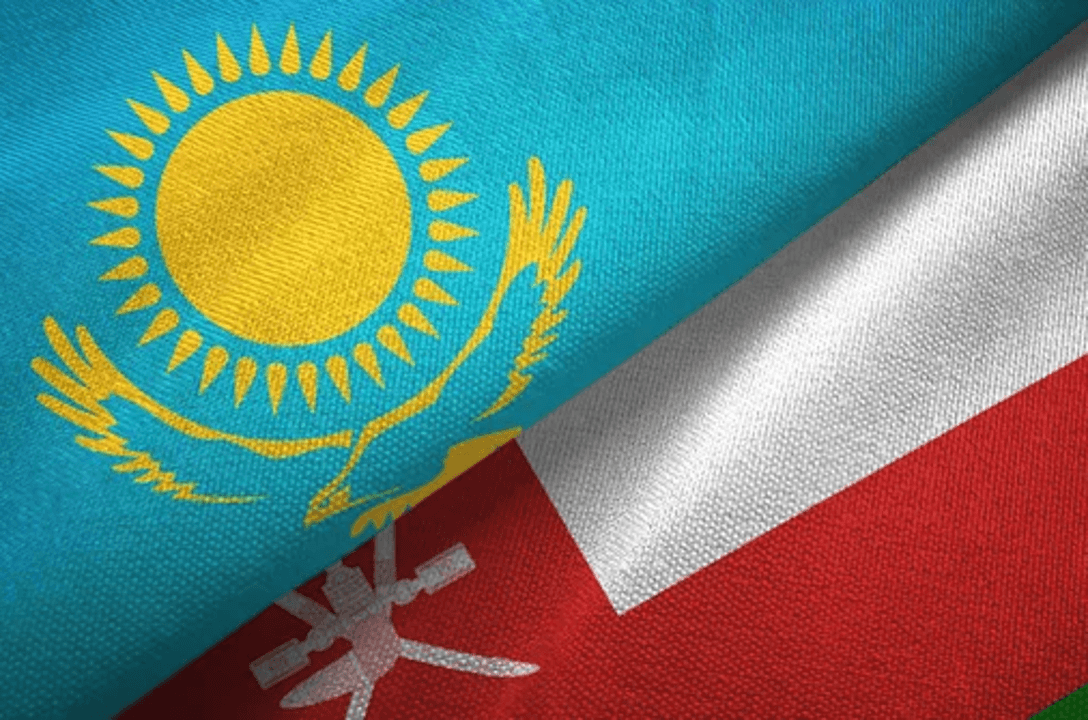
Prime Minister Olzhas Bektenov met with Omani Deputy Prime Minister for Economic Affairs Ziyazin bin Haitham Al Said in Astana to strengthen trade, investment, and economic cooperation between Kazakhstan and Oman. Discussions focused on energy, mining, logistics, digital technologies, agriculture, and tourism. The two countries currently share five major investment projects worth $3 billion, with new cooperation expected in renewable energy, artificial intelligence, and transport infrastructure linked to the Middle Corridor. During the visit, Samruk-Kazyna, Kazakhstan’s Sovereign Wealth Fund, and the Oman Investment Authority signed an agreement establishing a joint investment platform to support future bilateral projects.
Source: website of Prime Minister of Republic of Kazakhstan
Kazakhstan Secures $1.2 Billion Wind and Battery Energy Storage Deal
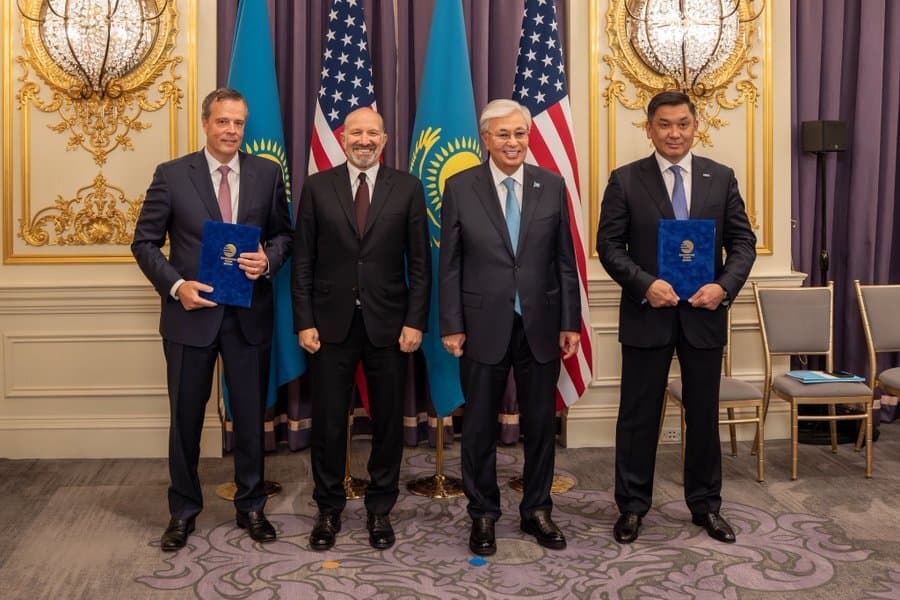
French company TotalEnergies has approved a $1.2 billion investment in a 1-gigawatt wind farm and a 600-megawatt-hour battery system, set to become operational in 2029. Approximately 75% of the project will be externally financed. TotalEnergies will hold a 60% stake, while two Kazakhstan state-owned companies will split the remaining 40%. The project advances Kazakhstan’s renewable energy goals, but the deal comes amid ongoing legal challenges, as the company contests a $4.6 billion environmental fine and a separate multibillion-dollar cost dispute linked to the Kashagan oilfield in the Caspian Sea.
Source: Reuters
Fuel Prices have Risen by About Nine Percent in Tajikistan Since Start of Iran War
The surge in prices has been connected to the onset of the Iran War and the closure of the Strait of Hormuz, leading to a rise in global oil prices and supply shortages. While regional averages were moderate from March to April, Tajikistan faced the highest price increase, with the greatest price hikes felt in Dushanbe. Tajikistan relies on external producers for its petroleum products, as Russia accounts for 70% of its total imports.
Source: Times of Central Asia
Kazakhstan, Kyrgyzstan, Uzbekistan to Launch a Hydropower Plant
Kazakhstan, Kyrgyzstan, and Uzbekistan are advancing one of Central Asia’s largest joint energy initiatives through construction of the Kambarata HPP-1 hydropower plant on Kyrgyzstan’s Naryn River. With a planned capacity of 1,880 megawatts and expected annual generation of 6,000 gigawatt-hours, the project is designed to bolster regional energy security, ease seasonal electricity shortages, and improve cross-border water management. Speaking at the Regional Ecological Summit Astana, President of the Kyrgyz Republic Sadyr Japarov described the project as strategically significant, noting that negotiations are actively progressing to finalize an intergovernmental agreement with support from the World Bank and other international financial institutions. The total construction cost of the hydropower plant is estimated to be $4.2 billion. Under the agreed financing framework beginning in 2026, Kyrgyzstan will cover 34% of project costs, while Uzbekistan and Kazakhstan will each contribute 33%. Electricity generated by the Kambarata HPP-1 project will be allocated proportionally based on each country’s financial participation. The three governments also plan to establish a joint-stock company in Kyrgyzstan to manage the plant’s construction and future operations, with ownership shares mirroring the financing arrangement.
Politics and Security
Azerbaijan-Ukraine Sign Bilateral Agreements on Defense and Energy
Over the weekend, President Ilham Aliyev hosted Ukrainian President Volodymyr Zelenskyy in Gabala, Azerbaijan. This trip marked the Ukrainian President’s first visit to Azerbaijan since Russia’s 2022 invasion of Ukraine. During this summit, the leaders signed six agreements to expand bilateral cooperation across multiple sectors, including defense and energy. Following the signing, Zelensky outlined the prospects of defense-industrial cooperation. While in Azerbaijan, he also met a team of Ukrainian military specialists who have been sharing their recent expertise with Azerbaijan. Aliyev highlighted their shared desire to expand economic ties and increase bilateral trade, which currently exceeds $500 million.
Source: Kyiv Post, Kyiv Independent, JAM-News
Russia to Shut off Kazakh Oil Flows to Germany through the Druzhba Pipeline
Starting May 1, Russia reportedly plans to cease the flow of Kazakhstan’s oil through its territory to the PCK refinery in Berlin. The refinery, which supplies Europe with up to 90 percent of its oil products, receives around 17% of its supplies from Kazakhstan sources via the Druzhba Pipeline. Kazakhstan’s Energy Minister Yerlan Akkenzhenov suggested that technical difficulties could be the reason behind the cutoff, although Moscow has yet to confirm neither this nor whether Kazakh oil flows could resume in June. Subsequently, Russian oil has begun to flow once again through the pipeline for the first time since the Druzhba Pipeline was damaged in January.
Source: DW, Eurasianet
Central Asia Adopts Astana Ecological Solidarity Declaration
Central Asian leaders adopted the Astana Declaration on Ecological Solidarity during the April 22–24 Regional Ecological Summit in Astana, establishing a shared framework for tackling climate change, biodiversity loss, pollution, and water security. The agreement encourages closer regional cooperation on environmental challenges, including glacier preservation, land degradation, and air quality. The summit also launched new partnerships on climate finance and biodiversity, signaling a broader push to strengthen cross-border environmental coordination across Central Asia.
Source: The Times of Central Asia
Uzbekistan and Rosatom Expand Nuclear Workforce Training Cooperation
Uzatom and Rosatom discussed expanding workforce development for Uzbekistan’s emerging nuclear energy sector during a joint meeting in Tashkent. The talks focused on implementing a bilateral nuclear cooperation roadmap signed in March, with human capital development identified as a core priority. Plans include specialized training programs, academic initiatives at the National Research Nuclear University’s MEPhI branch in Tashkent, and faculty development through Rosatom’s technical training courses as Uzbekistan prepares to build expertise for future civilian nuclear projects.
Source: Trend