Headlines from the Caspian: March 9, 2026
Recent Articles
Author: Caspian Policy Center
03/09/2026
 astanatimes.com
Energy and Economy
Kazakhstan and Asian Development Bank Establish $5.5 Billion Investment Program
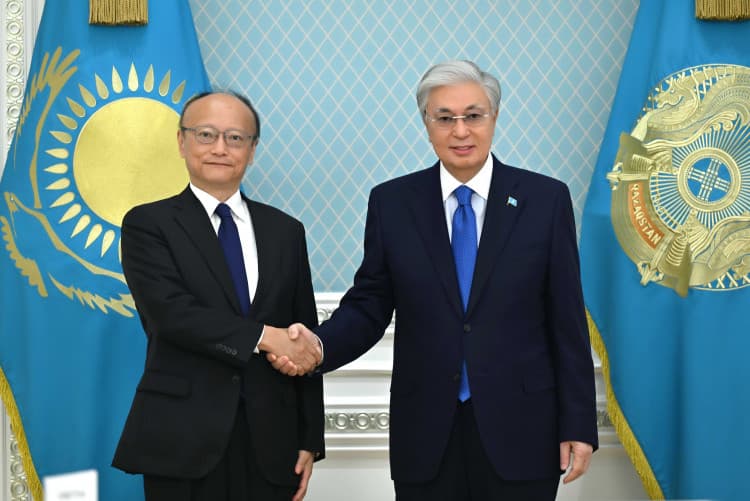
The Kazakhstan government and the Asian Development Bank (ADB) signed the agreement as a commitment to finance 15 projects in Kazakhstan from 2026 to 2029. The investment program was announced as ADB President Masato Kanda held separate meetings on March 2 with President Kassym-Jomart Tokayev and Prime Minister Olzhas Bektenov. Kanda and Kazakh officials identified essential sectors for continued financial support, including housing and utilities, resilience to natural disasters, critical minerals, regional connectivity, and private-sector projects.
Sources: Asian Development Bank, The Astana Times
Asian Development Bank Develops 2026-2030 Strategy with Tajikistan
During a March 4 meeting with Tajikistan’s President Emomali Rahmon, the Asian Development Bank’s (ADB) president, Masato Kanda, unveiled its country partnership for the next five years. The strategy prioritizes the digitization of Tajikistan’s social services, the resilience of its economy, measures to address climate change, and increased access to labor opportunities. Kanda also announced the ADB’s commitment of $1.1 billion to support infrastructure, job growth, and social services in Tajikistan from 2026 to 2028.
Source: Asian Development Bank
Kazakhstan’s National Central Bank Announces Largest Sovereign Reserve Diversifications into Cryptocurrency
Kazakhstan’s central bank plans to allocate up to $350 million from its $69 billion reserves into crypto-linked investments, marking a rare move by an emerging market monetary authority toward digital assets. Instead of buying crypto directly, the bank will invest through funds, index products, and companies tied to Bitcoin and Ethereum infrastructure, with the shift expected to begin around April–May. The allocation will come from rotating a portion of gold and foreign exchange reserves, signaling a cautious diversification strategy. Analysts say the move might also reflect lessons from Russia’s 2022 reserve freezes, exploring crypto as a hedge against geopolitical financial risks. The announcement comes as Bitcoin consolidates near $70,000, adding symbolic institutional support to an already tight market.
Source: Crypto.News, Reuters
Kyrgyzstan Plans to Build a $200 Million Solar Power Plant
Kyrgyzstan’s the National Investment Agency signed a Stabilization Regime for the construction of a 325 MW solar power plant in the Ak-Kuduk village of Naryn region. The project is anticipated to increase the proportion of renewable energy and speed up the shift toward cleaner power sources. It is also expected to draw substantial investment into the Naryn region, supporting local socio-economic growth while creating new employment opportunities during both the construction and operational stages.
Source: Kabar
Kazakhstan and Shell Sign a New Contract to Explore Zhanaturmys Oil and Gas Block
The Ministry of Energy of Kazakhstan announced that Kazakhstan and Shells’ subsidiary in the country have signed a contract for geological exploration of the Zhanaturmys field in the Aktobe region. The Zhanaturmys block, covering 1,377 square km (532 square miles), is in one of Kazakhstan's oil and gas basins. The signing happened amid the engagement of Shell and Kazakhstan in an international arbitration case on two other oil fields in Kazakhstan in which Shell has stakes. In January, Karachaganak shareholders, including Shell, lost a legal dispute worth up to $4 billion. Litigation for the Kashagan project, in which Shell is also a shareholder, is ongoing, amounting to about $160 billion. The company had stated that it does not plan to invest further in the country’s energy sector.
Source: Reuters, Times of Central Asia
Uzbekistan and Czech Republic Cooperate on Labor Migration
Uzbekistan and the Czech Republic are expanding cooperation on organized labor migration following talks between Migration Agency Director Behzod Musayev and Czech Ambassador Lubomir Frebort. The discussions focused on preparing qualified Uzbek specialists to meet the demands of the Czech labor market, with particular attention to training medical workers such as nurses and elderly-care providers. Prague currently allocates 150 labor visas annually for Uzbek citizens. The Czech side also expressed interest in Uzbekistan’s training programs for medical professionals seeking employment abroad. Both countries agreed to continue practical cooperation and develop new initiatives in this area.
Politics and Security
Azerbaijan Threatens Retaliation after Iranian Drone Strikes Nakhchivan
Four people were left injured after two drone strikes by Iran hit Azerbaijan’s Nakhchivan exclave near the border with Iran on March 5. One drone struck a terminal building of Nakhchivan International Airport, while a second fell near a school building in the village of Shakarabad. After convening the security council in Baku, Azerbaijan’s President Ilham Aliyev called the attacks drone strikes “terrorist acts” and vowed to conduct “retaliatory measures,” which Aliyev later clarified would not include military operations against Iran in the immediate future. Iran has denied involvement in the attack. Just a day later, Azerbaijan claimed that it had prevented a terrorist attack orchestrated by the Islamic Revolutionary Guard Corps (IRGC). Seven Azerbaijani nationals have been detained so far, as Baku stated that the attackers targeted the Israeli embassy, the Baku-Tbilisi-Ceyhan (BTC) pipeline, a synagogue, and Jewish community leaders.
Source: Ministry of Foreign Affairs of Azerbaijan, President of the Republic of Azerbaijan, Euronews
Armenia and Azerbaijan Receive Over 1,500 Evacuees from Iran
The two Caucasus countries have accepted both foreign nationals and Iranian citizens as Iran’s war with the United States and Israel escalates. Primarily across the Meghri checkpoint on the Armenia-Iran border, Armenia has received around 400 evacuees, 300 of which are reportedly Iranian. Azerbaijan has accepted over 1,200 evacuees through the Astara border crossing, with the vast majority being foreign nationals of Chinese, Russian, and Tajik origin. Meanwhile, Turkmenistan has provided passage through checkpoints along its southern border with Iran, with evacuees from South Korea, Russia, Kazakhstan, and Uzbekistan confirmed.
Sources: OC Media, Euronews, Times of Central Asia
Pezeshkian calls Aliyev, Denies Iran’s Involvement in Drone Strikes
On March 8, President of Iran Masoud Pezeshkian called his Azerbaijani counterpart Ilham Aliyev, noting that noting that the incident involving drone strikes on Nakhchivan “had no connection with Iran.” Pezeshkian pledged that the Iranian side will investigate the incident. He also expressed his gratitude to Aliyev for his visit to the Iranian Embassy in Baku, Azerbaijan to offer condolences over the passing of Iran’s Supreme Leader Ayatollah Khamenei.
Source: President of the Republic of Azerbaijan, AnewZ
Escalating Middle East Conflict Disrupts Deliveries to Kyrgyzstan
Escalating military activity in the Middle East has severely disrupted logistics routes to Kyrgyzstan, with cargo transit through Iran and the key port of Bandar Abbas effectively halted. As a result, shipments of auto parts, equipment, perfumes, and other goods from the United States, Europe, and the Persian Gulf are stranded at ports or transit hubs. The disruptions have also stopped Kyrgyzstan’s exports to Türkiye and Europe via Iran, leaving more than 30 Kyrgyz trucks stuck in northern Iran. Additional instability affecting routes through Pakistan and Afghanistan has further complicated supply chains. Kyrgyzstan’s authorities and logistics companies are now negotiating with Chinese partners and regional governments to establish alternative transport corridors.
Source: The Times of Central Asia