Kazakhstan’s Arbitration Victory and the Recalibration of Oil-Gas Agreements
Recent Articles
Author: Dr. Eric Rudenshiold
02/05/2026
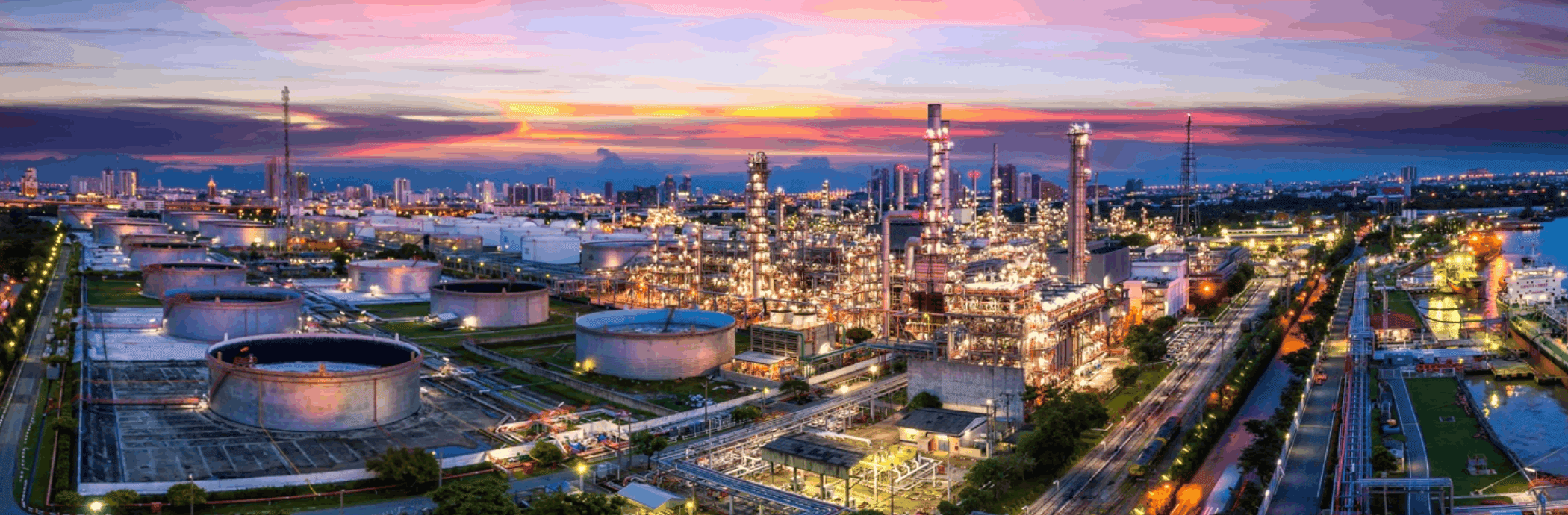 Karachaganak field
Significant repercussions are expected out of a recent court ruling both for Kazakhstan and the gas-and-oil consortium that developed and operated one of the world’s largest hydrocarbon fields. A January 2026 London tribunal decision ruled in favor of Kazakhstan in its arbitration dispute with the consortium operating the Karachaganak oil and gas field, forcing international investors to take serious note.
In its complaint, Kazakhstan claimed that the Karachaganak operators were improperly reimbursed for costs not authorized per their production-sharing agreement (PSA) with Astana. As a result of the arbitration ruling, consortium leaders Eni (29.2%) and Shell (29.2%), Chevron (18%), Lukoil (13.5%) and KazMunayGas (10%) might be required to compensate the government of Kazakhstan between $2 and $4 billion in damages.
Though the final compensation award has yet to be formally determined, will likely be subject to appeals, and—per the arbitration’s mandatory agreement—will not be publicly disclosed, the ruling is already being described as a major victory for a PSA-host state and the largest arbitration victory regarding a Central Asian energy sector to date. Beyond Kazakhstan, the landmark decision determined by international mediation could well be precedent setting for global PSA relations seeking to balance state interests and operator obligations.
What the London Tribunal Found
The arbitration court's decision was largely comprised of three legal conclusions. First, the consortium charged costs to the state without government approval in violation of the PSA’s terms and contractual obligations. Second, a significant number of expense claims lacked sufficient documentation in addition to prior authorization which undercut the legitimacy of cost recovery efforts. Finally, the court dismissed operator claims for statute of limitations protection regarding compliance violations.
The London ruling will likely presage changes to how PSA revenue and cost-sharing formulas are structured and implemented in the future, particularly governing the calculation and treatment of deductible costs. The findings signal the need for tighter contract compliance administration that places the onus on international operators to secure prior government approvals for cost deductions and to maintain rigorous documentation standards.
The 2020 Historical Context
To understand the significance of the current ruling, an earlier Karachaganak arbitration provides critical perspective. From 2015 to 2020, Kazakhstan pursued a similar claim through arbitration against the same consortium. The profit-sharing dispute ultimately resulted in a $1.9 billion negotiated settlement, before a final arbitration ruling was determined. The agreement resulted then in Kazakhstan’s largest-ever settlement from an arbitration dispute of this nature.
That settlement was noteworthy not only for its size but also because it reset some PSA terms in favor of increased participation by the government of Kazakhstan. That victory appears to have encouraged Astana authorities to assert their own interpretations of contractual rights rather than accept PSA analyses favorable to investors.
The 2026 decision now builds on the 2020 legacy. Though some arbitration issues are similar, more importantly, the 2020 settlement was negotiated versus the 2026 ruling that comes from a full arbitration verdict. As a result, the 2026 decision, when it is finally reached, will have deeper legal foundations and far broader implications.
Kazakhstan’s Legal Strategy
The Karachaganak effort is not an isolated issue for Kazakhstan. Astana is also pursuing a much larger arbitration case against the North Caspian Operating Company (NCOC), the consortium managing the country’s massive Kashagan oil field. Claiming over a staggering $160 billion in alleged cost- and revenue-sharing abuses, lost profits, and issues with regulatory performance, the Tokayev government is aggressively pursuing a highly visible case against the country’s largest investors and partners over the management of one of the world’s largest oil reserves.
NCOC is made up of KazMunayGas, Eni, ExxonMobil, Shell, Total S.A. (16.88% each), China National Petroleum Corporation (8.4%) and Inpex (7.56%), responsible for operating the complex Kashagan megaproject. In concert with Karachaganak and the Tengiz fields, Kashagan is a major component in Kazakhstan’s economy. The three fields together account for nearly 70%of the country’s oil production, or roughly 14% of GDP.
Investment Implications
The Kashagan court case represents not just a dispute over revenue sharing and PSA billables, it also reflects an underlying desire on the part of Astana to rebalance the country’s dealings with foreign investors. Seeking greater equity over deals struck in the 1990s, the case also stakes out broader territory for government engagement in future undertakings with PSA interpretations more friendly to the host government. In the future, there will likely be spillover implications for foreign investors seeking to engage in strategic-mineral and rare-earth mining and processing ventures that are in the planning stages.
Kazakhstan’s court disputes have significant cost-profit implications for corporate bottom lines and investment prospectuses. Boardroom assumptions regarding returns on massive investments in the Karachaganak and Kashagan fields now require reconsideration, given potential settlement costs. Approaching oil and gas field expansion opportunities in Kazakhstan and contract lease renegotiations are also looming in the near future and likewise require bottom-line recalibration.
Certainly, the implications of the Karachaganak ruling will mean that future PSA interpretations and compliance will need far greater oversight. Enhanced contractual compliance should yield greater predictability for Kazakhstan, but Astana’s efforts to renegotiate legacy PSAs can cause increased concern for investors. Achieving clarity on terms and expectations in future negotiations will be critical to stability for both foreign investors and Kazakhstan.
Conclusion
Kazakhstan’s arbitration victory at Karachaganak is more than a stand-alone legal success. It is part of Astana’s stepping-stone strategy to engage anew with international energy companies on appropriate ways to negotiate, operate, and enforce long-term contracts in the hydrocarbon sector. From the 2020 settlement, to January’s tribunal ruling and to the looming Kashagan arbitration, Kazakhstan’s strengthening legal assertiveness reflects a consequential shift toward greater contractual clarity, active state engagement, and rigorous compliance enforcement in the governance of its lucrative natural resources. In pursuing these objectives, Astana’s court outcomes might well change the global terrain and future for international engagement in PSA partnerships.